SOURDOUGH STARTER
NAMING
Name: “Sigourney”
This name, “Sigourney”, is taken from the actress (born Susan Alexandra Weaver; October 8, 1949). (“Xenomorph XX121”)
ALIENS
Images were taken from: Fandom Xenopedia(“Xenomorph XX121”)
Sigourney Weaver played the Ellen Ripley character in the Sci-Fi movie Alien. She was the mother of the alien species XENOMORPH XX121. (“Xenomorph XX121”)
“They XENOMORPHS are vicious, predatory creatures. Their only goals are the propagation of their species and the destruction of any life that threatens them. (“Xenomorph XX121”)
Like wasps, bees, or ants, Xenomorphs are eusocial, with a fertile Queen
that breeds a host of subordinate castes. (“Xenomorph XX121”)
The creatures are known for their potent acidic blood and their pharyngeal jaws. Yet, their biological life cycle is unique. Their offspring are implanted inside living hosts. They erupt violently from their chests. This process is in many ways their signature aspect.” (“Xenomorph XX121 (Alien)”) This is why I chose this name for my sourdough starter. Sigourney is the perfect name for a mother. She guides a colony of resilient microbial species. They seek a queen to lead them to supremacy.
DOCUMENTATION
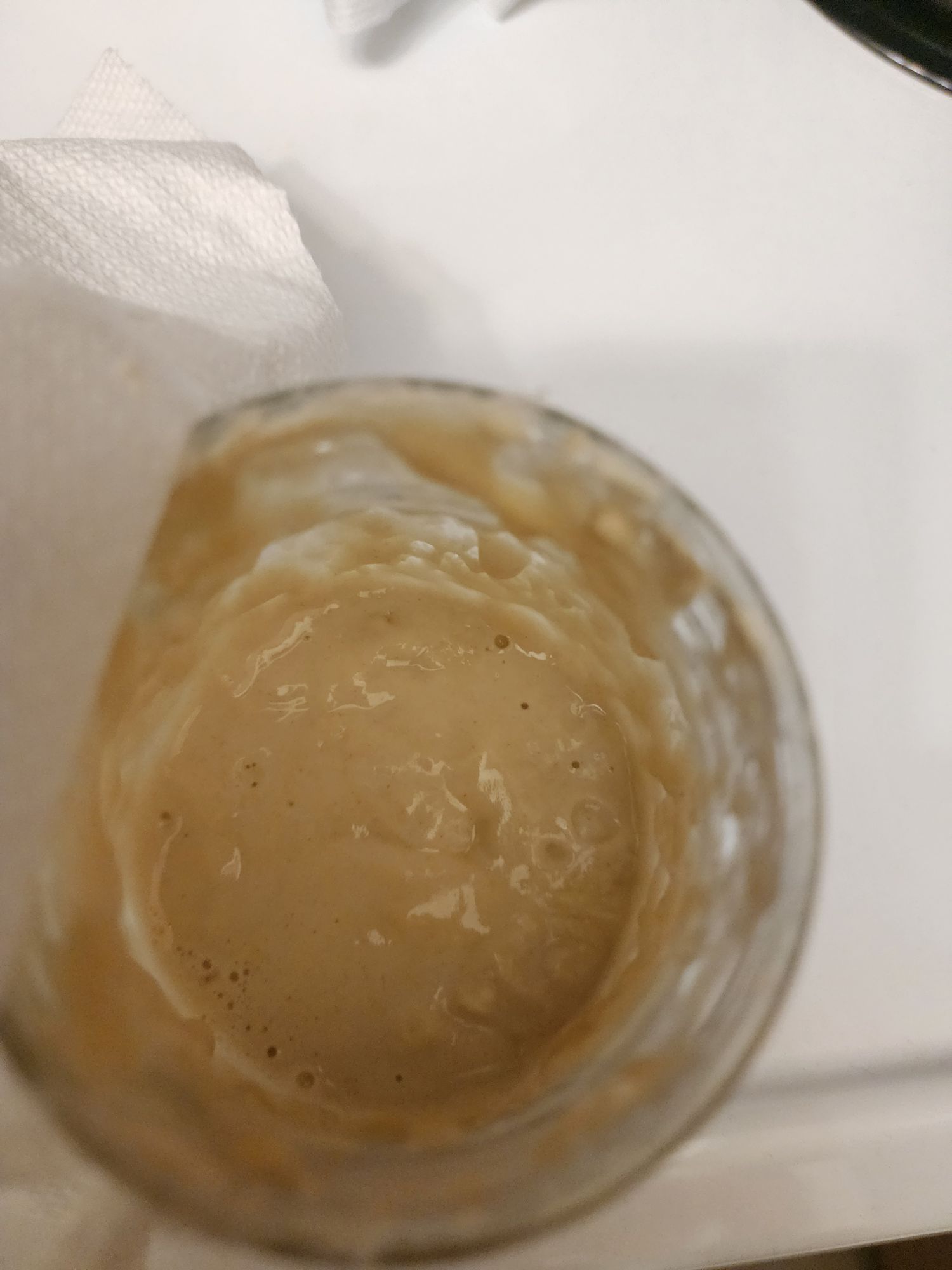
Days One & Two
Sigourney began with 60 ml of water, 60 grams of all-purpose flour, and a few ounces of honey. At first, there was no odour. Her complexion was pale and beige. By the second day, she had lost her paleness, developing a funky odour and a brownish hue. This quirky girl had certainly grown.
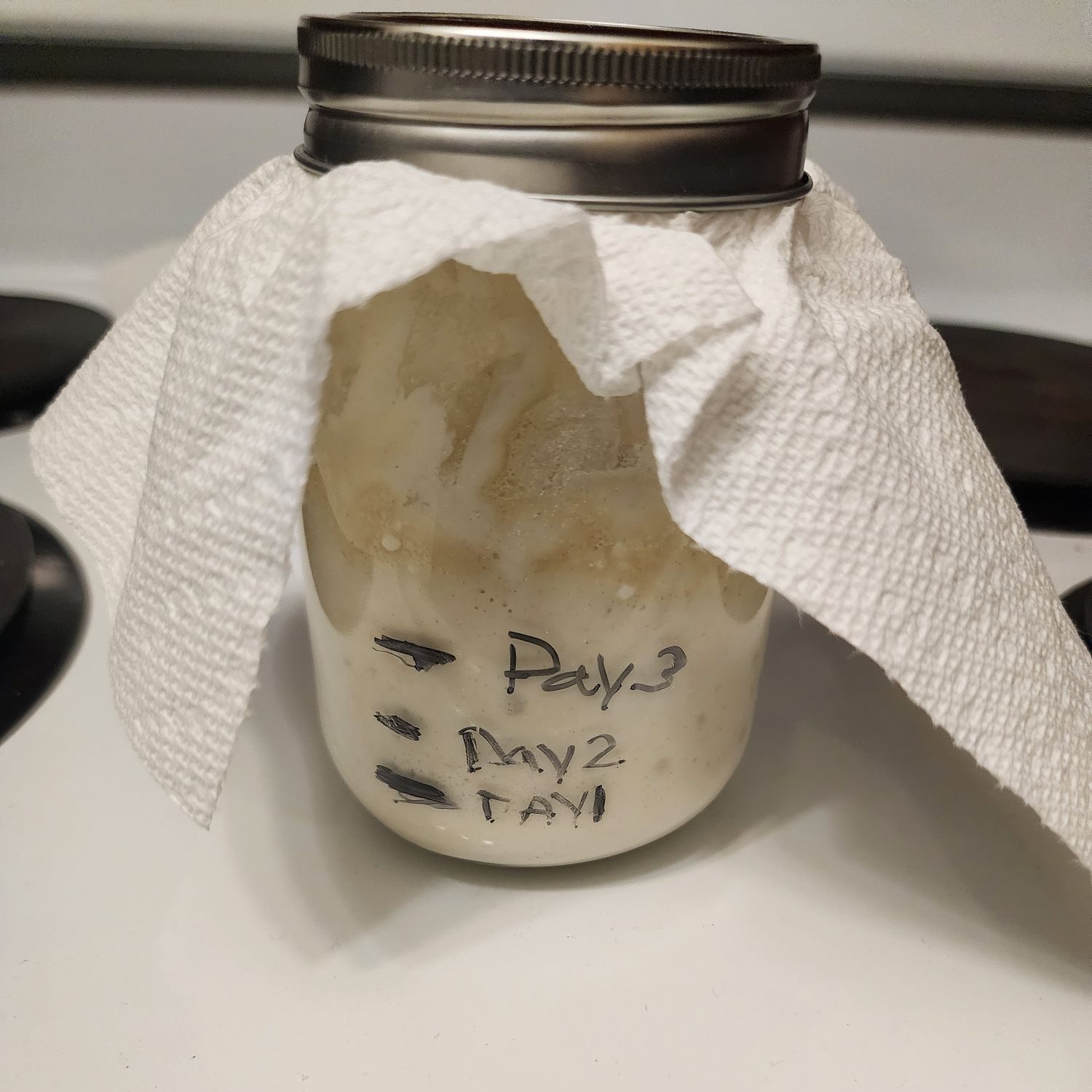
Days Two & Three
Sigourney grew significantly in just two days. On the second day, I mistakenly left the lid on, depriving her of air. To fix this issue, I needed to feed and aerate her. Fortunately, the next day, she thrived, as we can see. I used a paper towel to cover the jar and attached a lid. Her size doubled, and her texture was bubbly.
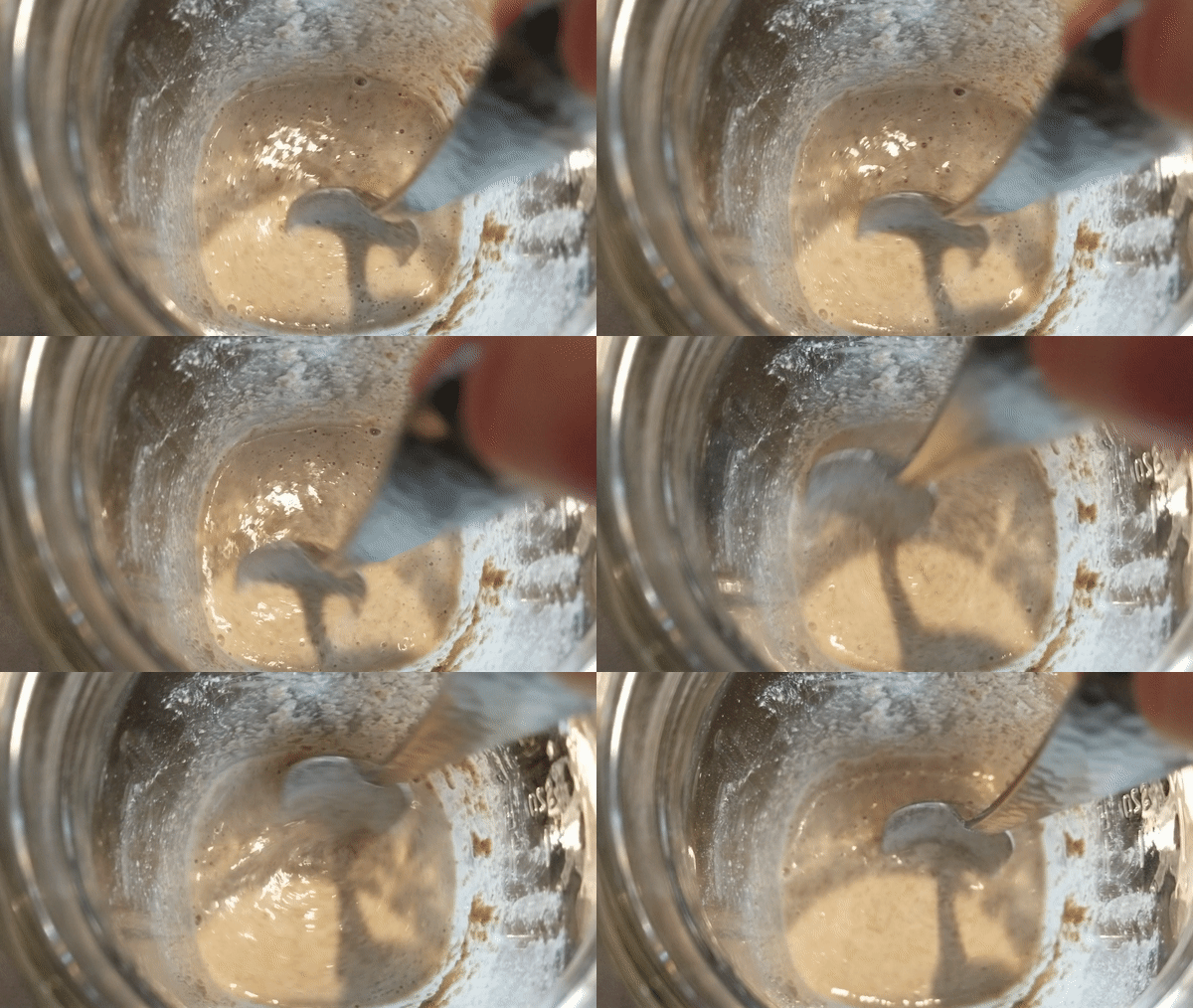
(linked to Nick’s Novice Kitchen page https://novicekitchen.com/kitchen-adventures/sourdough-starter)
Day Four
Every story unfolds with beauty and resilience. Sigourney requires time to grow, and her odour is becoming less pungent. Fewer bubbles are forming.
Many online sourdough experts suggest feeding equal parts of water and flour. Yet, using only flour and water is better. This minimizes the risk of contamination. Additionally, they recommend increasing the feedings to counteract sluggishness. (“Vegan Sourdough Starter”)
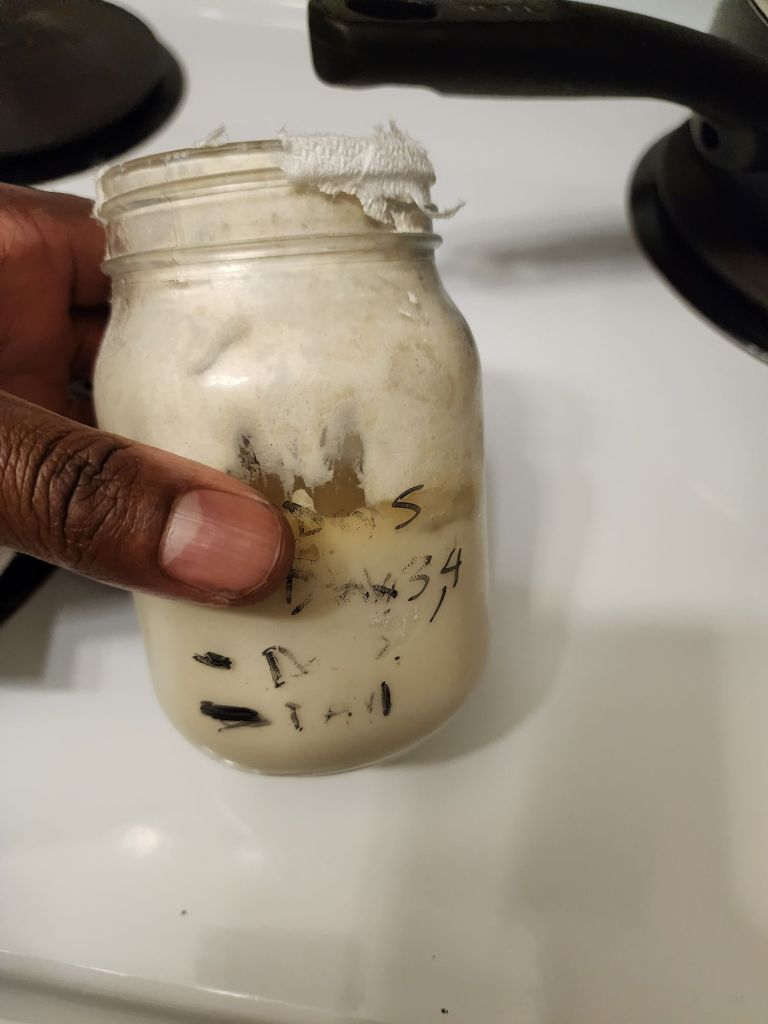
Five & Six & Seven
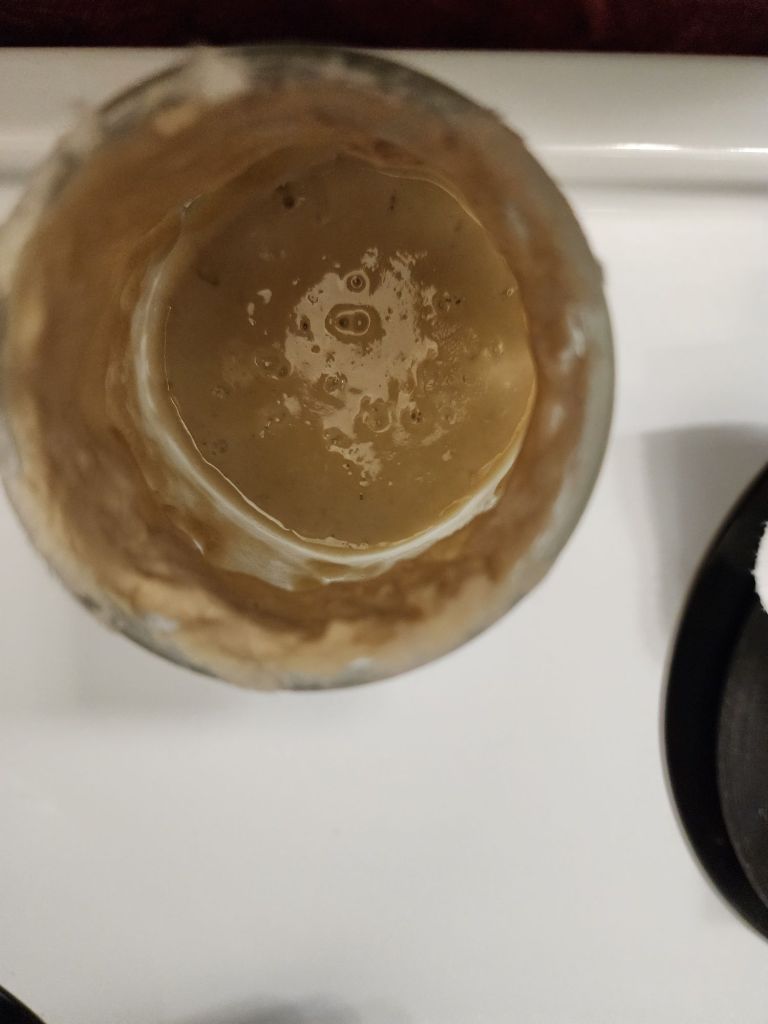
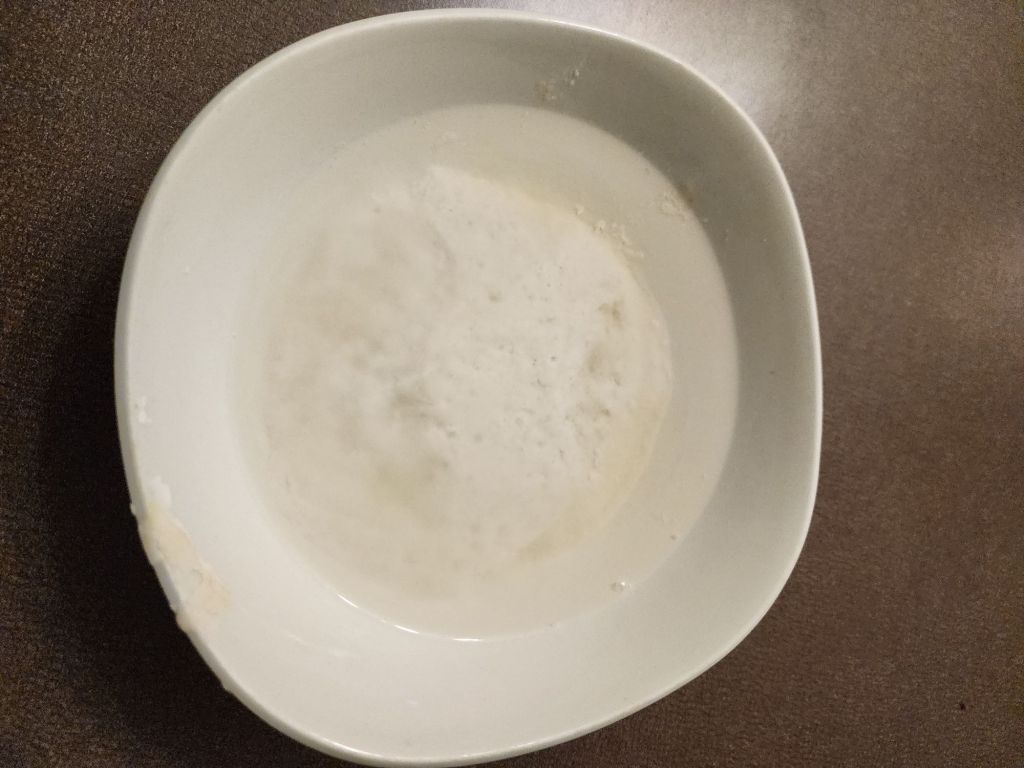
On day five, Sigourney was mature. She had a few bubbles. But her color was not dark or light—she was tan. Her smell was no longer funky, and she grew less. As a result, I feared the worse. That she was dying.
On day six, I saw some signs of life again, so I knew she was not dead. Her colour returned, and she was stinky. Her bubbles were small and few. Yet feeding her was serious. She needed more. So, I fed her twice a day.
I should not have removed the funky parts that way; she has grown more. But her funky parts had a life all their own.
By day seven, I had put her into the fridge to rest. her color was pale and white compared to the brownish color she was days prior. I decided not to refrigerate the parts of here that I had removed and left them on the counter. Those parts became hard so I immersed them in water daily, and now they sit on the counter waiting. Like alien offspring.
SOURDOUGH STARTER
Instructions
DAY 1:
60g Flour
60g Dechlorinated* Water
3-5g Honey
Non-reactive utensils
Mason Jar
*water that has been boiled and cooled. You can also use distilled water.
Mix ingredients together until fully incorporated. Try your best to practice the best sanitation practices to avoid various bacteria. Once you get home, swap the lid for a loose cover. Use a clean cloth or a clean piece of paper towel. Secure this with the metal ring that came with the jar. Place in a warm, dark space overnight.
Taken From: RTA 933 Technical Specifications
By Ashley Jane Lewis, PhD.
Preface
“These instructions are a hybrid of the techniques learned from my baking diploma at George Brown. They are also a hybrid of this write-up from The Clever Carrot. Additionally, you can find more information from Good Housekeeping. As you explore the sourdough community of the internet, you’ll see many interpretations. The required steps often have similar interpretations. If you’re having trouble with your starter, you can always do some research. See if your issue has been documented by someone else. Chances are it has!
Introduction
The fundamentals of bread are made up of flour, water and yeast. The yeast acts as a leavening agent, creating air pockets that help the bread rise in the baking process.
Bread is one of the most ancient human made foods on the planet, dating back at least 30 000 years! Bread has supported the sustained existence of many communities across the world. It has helped societies survive war, disease, and famine. Bread was prepared long before the industrial revolution. It stands as an interesting staple food to explore for social, ecological, and economic reasons.
Bread has been around since the early days of the human race. Commercial yeast, also known as industrial yeast, only emerged in 1868. It became widely available in Europe and North America in the 19th century thanks to factory advancements for mass production.
So how was bread made before 1868? Natural yeast!
Yeast is everywhere. We find it on our skin and in the air. It’s also on plants, fruit, and vegetable skins. Additionally, it is found in soil and our digestive tracts. It’s one of the oldest organisms, dating back hundreds of millions of years ago. Yeast is part of the fungus kingdom, considered a eukaryotic, single-celled microorganism. Its prevalence makes up at least 1% of all observable fungi. This doesn’t sound like a lot. Don’t forget that there are 2.2 – 5.1 million species of fungi on the planet. Scientists have only identified and categorized around 148 000 species. Given these numbers, 1% is a very high percentage!
Creating a sourdough starter involves harnessing and nurturing a yeast culture. This process prevents the culture from catching “bad” bacteria until it stabilizes.
What is a sourdough starter? A starter is a natural yeast culture used in the process of making bread. The yeast feeds off the natural sugars in the flour and creates gases. Nurturing this yeast culture creates a community of microbes. We’ll continue to talk about the science behind the activity in sourdough in class.” (Lewis)
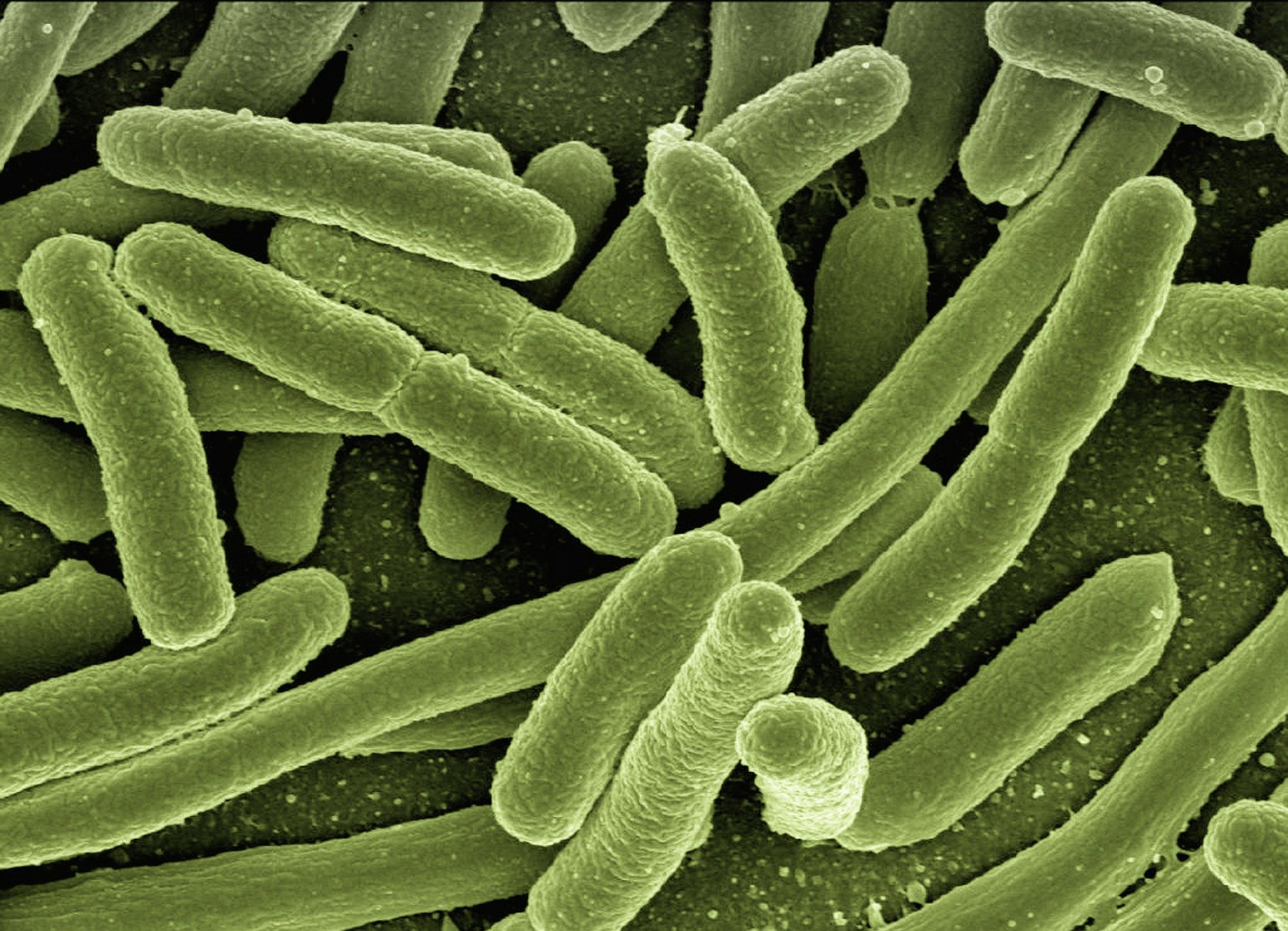
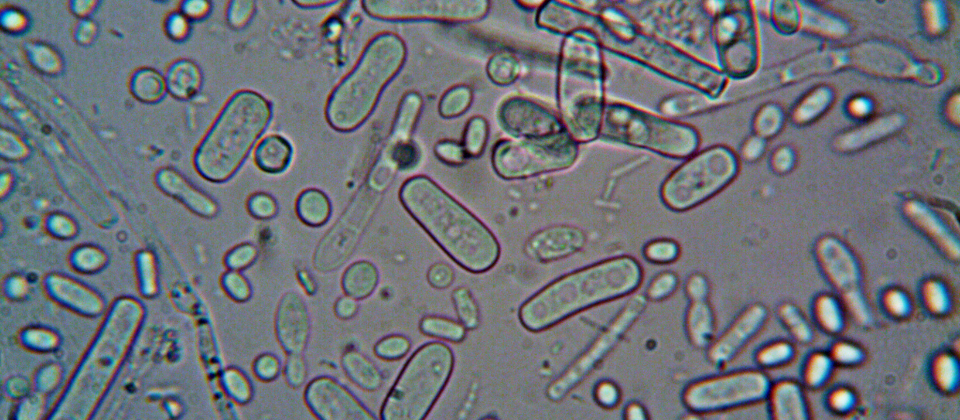
Microbial cells are the individual units of life that make up microorganisms. These tiny life forms include bacteria, archaea, fungi, and protists. Some types of algae and viruses are also included, although viruses aren’t technically “cells”.
FERMENTING COMMUNICATIONS
Maya Hey,
Saving Gigi (2017).
FERMENTATION PRAXIS AS INTERSPECIES COMMUNICATION
I recently had to save Gigi from an opportunistic yeast after I left town for a few weeks.
Nothing out of despite or neglect, I’d just taken for granted that some ferments (like the beer
sitting next to Gigi) can quietly bubble away, while others needed more regular tending. You
see, Gigi is the last living iteration of their human form: Gigi-the-human is no longer with us,
but Gigi-the-sourdough-starter lives on in kitchens like mine. It was passed down from Gigi’s
hands through mutual friends, and subsequently bequeathed to me. I’d never met Gigi in
person, but our bodies encounter each other nevertheless.
Gigi came into my life when I was living alone. With Gigi around, I felt cared for because
feeding one and feeding many required that I get out of bed just the same. Besides, we both
needed refreshing and nourishment.
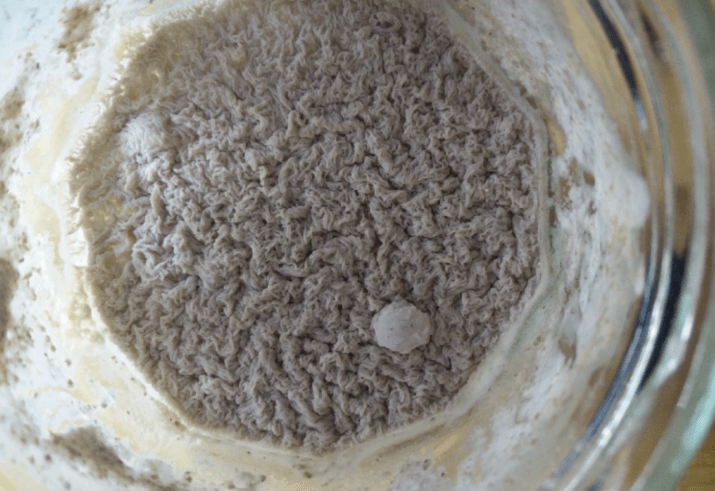
But now, Gigi was covered with a grey, stringy mess. Imbued with heightened stakes and a
grave sense of responsibility, I was keen on saving Gigi. Like a nurse looking after a patient,
I continuously monitored Gigi with my nose and neurotically checked for any mysterious
growths. Just this morning, I spotted another bloom of mould on the jar’s inside, so
I transferred Gigi to yet another container, re-fed and re-aerated. Transfer, feed, aerate,
repeat. Transfer, feed, aerate…
Maya Hey,
Saving Gigi (2017).
(linked to Jane Doe’s Flickr page and the license)
INTRODUCTION
“The material practices of fermentation connect different bodies—human bodies, microbial bodies, bodies of research, and regulatory bodies—in a way that challenges conventional understandings of communications. In fermentation praxis, bodies meet despite differences in time, species, and scale. With this in mind, this article asks: How could fermentation be theorized as a mode of communication across these differences? For example, the encoding/decoding model put forth by Stuart Hall assumes that there are two constituents, independent of each other, whose autonomy marks them as “source” and “receiver.”1 However, human bodies and microbial bodies share an entangled history2, with the
The latest research indicates that each human body has as many microbial cells as humans.3 Additionally, increasing evidence shows that cravings and mood are impacted by our microbiome (the unique profile of microbes living in and on our bodies),4 which challenges our assumptions about how desire and motivation are conveyed. The imbricated nature of human and microbe complicates who is sender and receiver, suggesting that communication paradigms must be updated.” – Maya Hey,
 ZOA
ZOA 