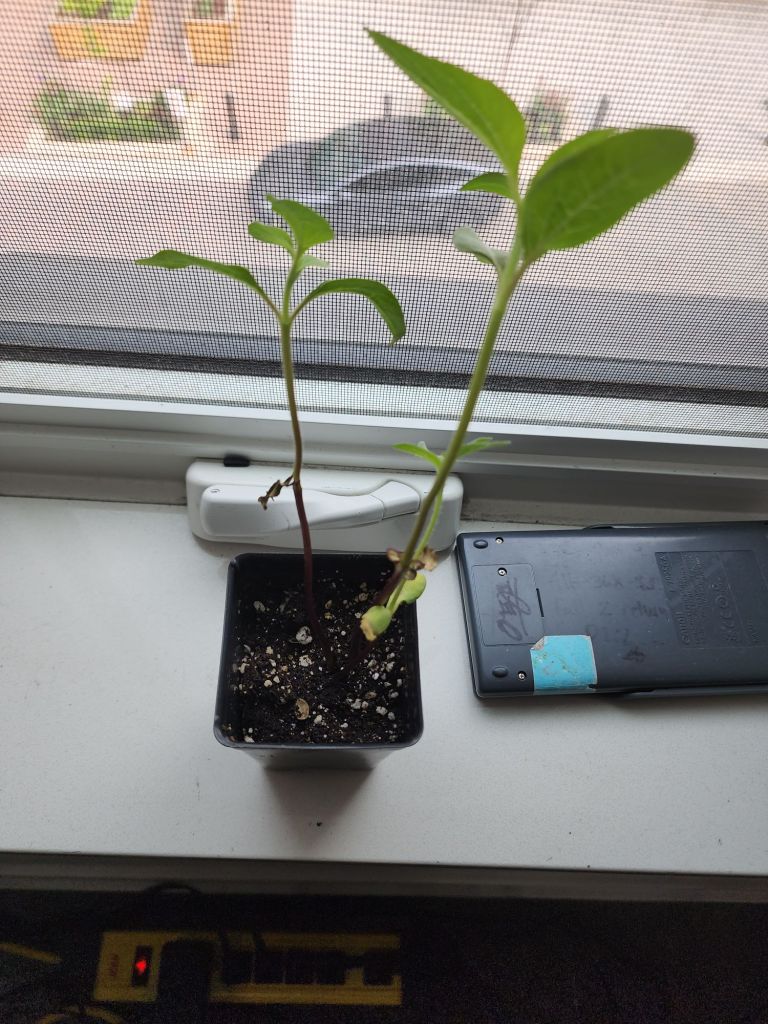
DAY ONE
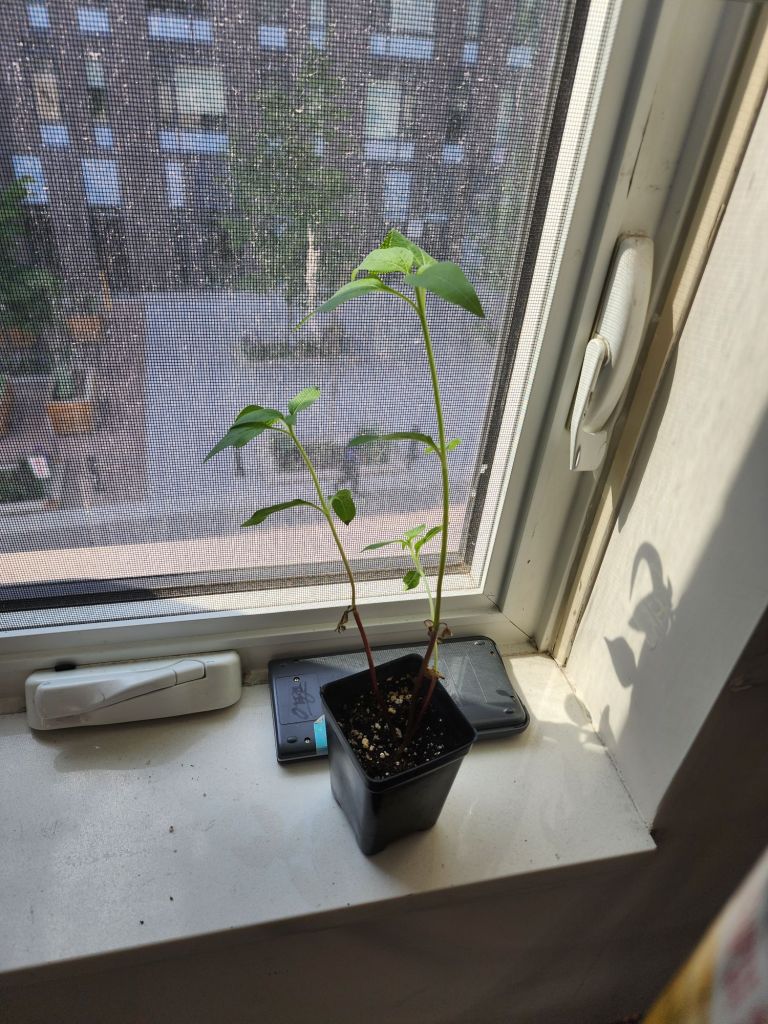
DAY TWO
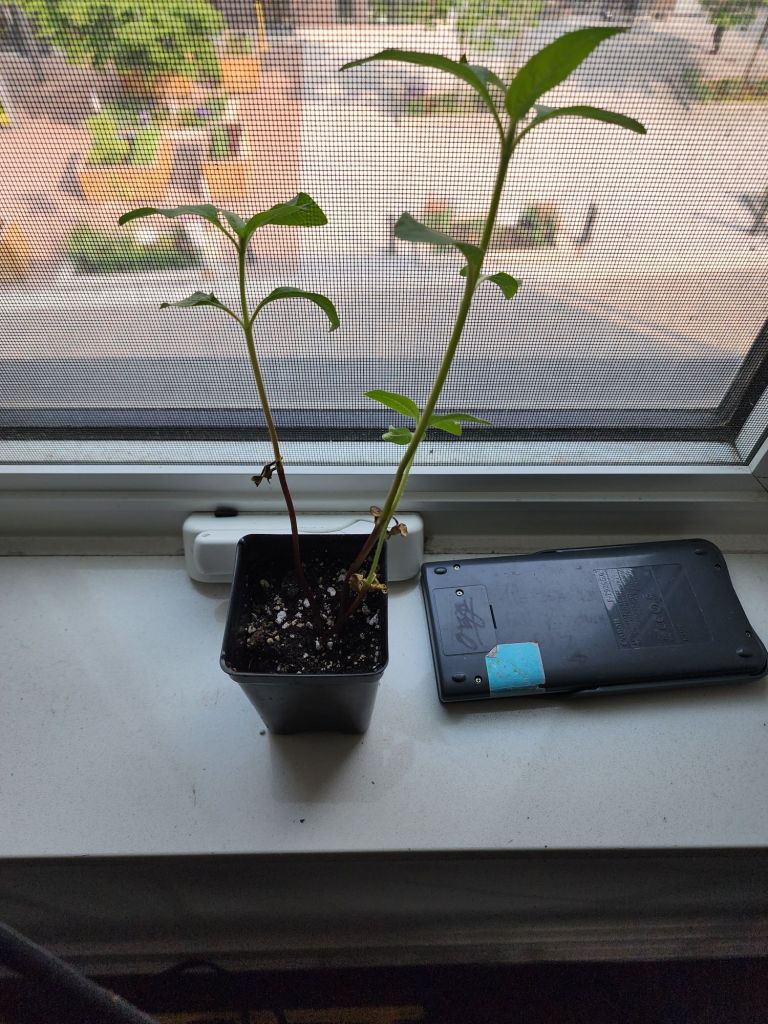
DAY THREE
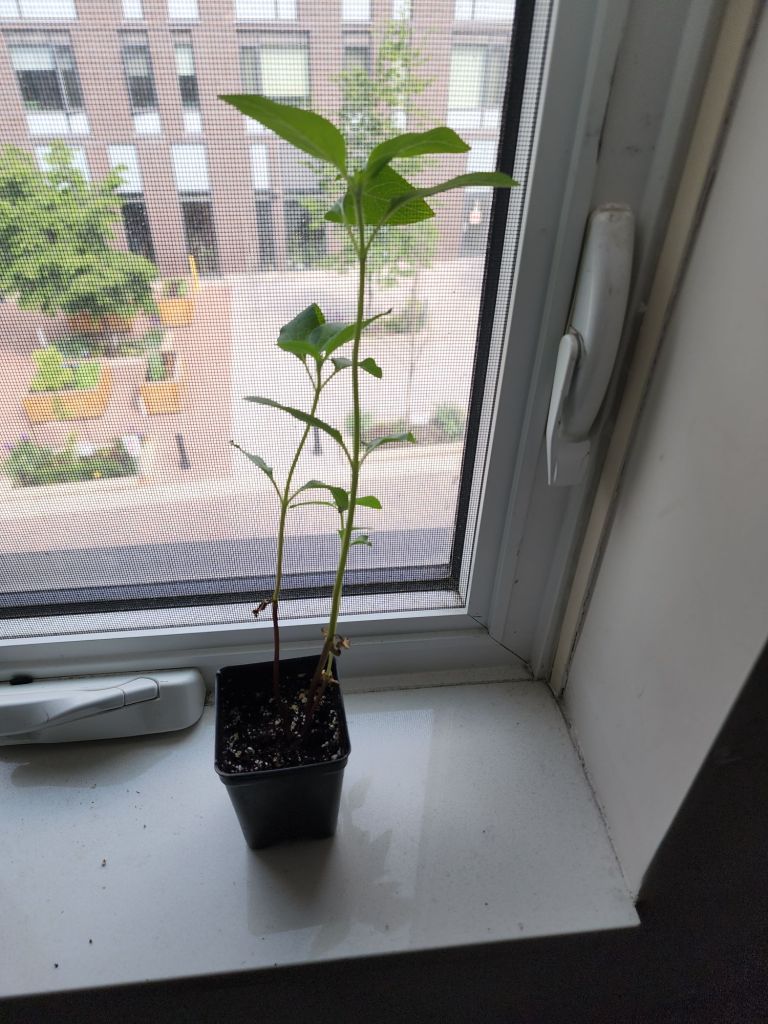
DAY FIVE
I did not water my seedling on day one. I thought I would kill it. When I noticed it was drooping, I gave it a little water. By then, the two small leaves on the bottom of the stem near the red part were crumpled and dry. I guess they didn’t make it. I can see that the leaf is pointed and has smaller veins and pores to absorb light. I watched my seedling as it grew. It became taller and sprouted new leaves faster and even bigger than before. Instead of knowing my plant by looking at it, I though what if it were outside? How it thrive? I wondered if it was an indigenous plant? I realized that by knowing or experiencing the plant, I gained insight into its survival process. I understood what it needed. Thus I cared for it. The name, gender and other features of this plant are not important as yet. I can learn about it as it grows. Anything I read would only be speculation. I am its caregiver. In the wild, it would not need me. Observation becomes a form of intimacy — seeing without naming, recognizing without categorizing.
The need to understand or interpret another sense of being is tied to respect for all species. This is similar to ingenious knowledge thinking. Everyone is treated as an object. There is no personification. Phenomenological experiences are shared by a group. In Learning to See, Kimmerer challenges us to engage beyond the surface. If I cared for a group of people like a family, I would know them intimately. I wouldn’t need to recognize them based on just labels. Similarly, when relating to other people or communities, I do not instantly understand their needs. This is especially true for those different from me. I do not instantly understand their language or experiences. But through attentive care, active listening, and responsiveness, understanding grows organically. Naming or labeling is a form of interpretation, and it creates ideologies and boundaries. Labels become the norm, and we lose sight of the true meaning of people. We forget things or why we need care. By interpretation, the experience is lost, and we rely on information and processes to see what we need to do.
From day to day, the plant grows toward the light. The red part of the stem is not changing or is staying near the bottom. The plant grows, and I water it. I thought about playing music for it, but it seems abnormal. I wanted it to live where the trees are. Where animals see it and interact with it. Brushing past it. But I have it here in my room locked up. The wind and air would be its friend as it grows toward the sun. This seedling becomes a metaphor for practicing empathy: I don’t need to know everything right away to care meaningfully.
This care process falls into a complex system. A simple system would have clear inputs and outputs. These include water, light, and growth. However, here the relationships are more nuanced. Many variables affect the plant: humidity, temperature fluctuations, soil microbiology, and even my emotional presence or inconsistency. Still, if I narrow my scope — say, focusing solely on watering — it can be simple. If I add layers like air quality or moon phases, it becomes complicated. But holistically, caring for a living organism within a web of changing factors and mutual responsiveness is fundamentally complex. This complexity is what makes the act of care feel relational rather than mechanical. Furthermore, if I don’t treat this as a system, I can learn more from it.
Plants can be indigenous ways to get knowledge or medicines. They are treated the same as a person and are not just used. By respecting the land and the process, not as an ideology or system, I lose the interpretation. I simply see the plant for what I experience with it. I live and water it. We live. That way, I simplify this process, and in so doing, I can even blur the boundary between human and plant. We live in one ecosystem. I am not its care caregiver, and it teaches me to see, breathe, eat and in some cases feel better. Oh, I just saw some hairs starting to grow on the stem. You’d have to see it to believe it.
 ZOA
ZOA 