BIO TEXTILES
“Biotextiles are specialized materials engineered from natural or synthetic fibres. These textiles have properties to interact with biological systems. They offer biocompatibility, porosity, and mechanical strength. Additionally, they are designed to be environmentally friendly for typical household applications.” (Wikipedia Foundation)
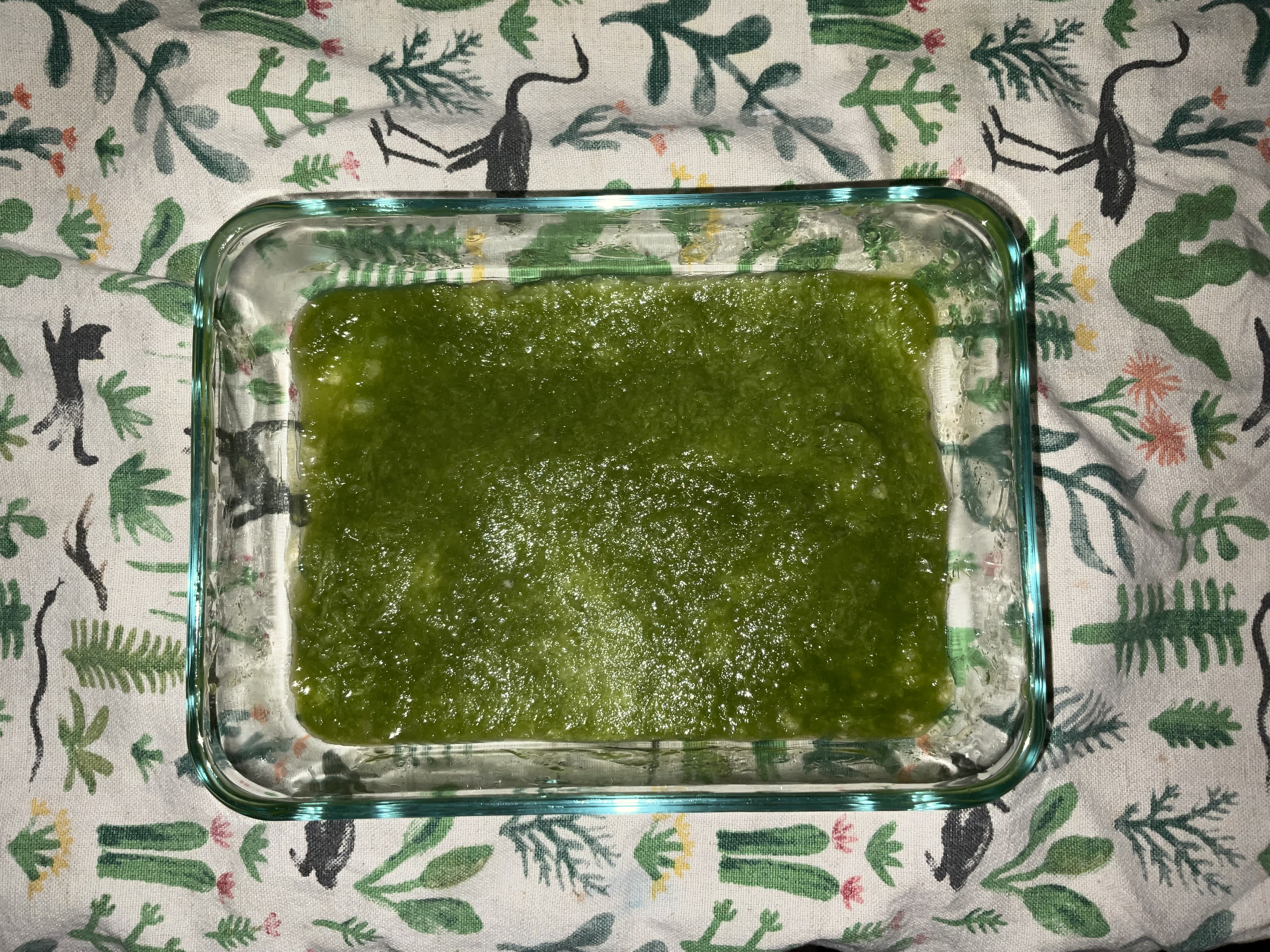
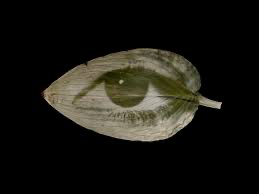
To read Journal entry three, click the link, “Chlorophyll” below
Chlorophyll Printing
© Meka Tome 2025
“Meka Tome (b. 1999) is an interdisciplinary artist working with experimental photographic techniques to challenge our perceptions and encourage introspection. Inspired by the ephemeral nature of organic life, her work uses transient materials. These materials mirror the fleeting nature of human experience.”
PHYSICS
.

🌿 Chlorophyll, Light, and p-Orbitals:
1. What are p-orbitals?
- p-orbitals are regions around an atom where electrons are likely to be found.
- They have a dumbbell shape and come in sets of three (px, py, pz), oriented at right angles.
- In carbon, nitrogen, and oxygen atoms — all found in chlorophyll — p-orbitals are crucial in forming pi (π) bonds and delocalized electron systems.
🌈 Resonance in Chlorophyll:
- Chlorophyll has a porphyrin ring structure — a large, planar ring system with alternating single and double bonds.
- This setup allows for resonance, where electrons are delocalized over the ring.
- These delocalized electrons occupy molecular orbitals formed from overlapping p-orbitals of the carbon and nitrogen atoms in the ring.
📌 The Mg²⁺ ion at the center of the chlorophyll helps stabilize this ring and influences electron distribution — but the delocalized π-electrons in the p-orbitals are what interact with photons.

- Photons and p-Orbital Excitation:
- When photons (light particles) hit chlorophyll, energy is absorbed by the delocalized π-electrons in the conjugated p-orbitals.
- This excites an electron from a lower-energy π orbital (bonding) to a higher-energy π* orbital (antibonding).
- This excited state is key to starting the electron transport chain in photosynthesis.
🔁 Why Resonance Matters:
Resonance spreads out electron density, making it easier for electrons to absorb energy from photons.
It also makes the chlorophyll molecule more stable and efficient at absorbing specific wavelengths, especially red and blue light.
Summary:
| Term | Role in Chlorophyll and Light Interaction |
|---|---|
| p-orbitals | Form the π-system through overlap in the porphyrin ring. |
| Resonance | Delocalizes electrons, enabling efficient light absorption. |
| Photons | Excite delocalized electrons in p-orbitals, triggering photosynthesis |
Got questions?want to LEARN try:
MIT OPEN COURSE WARES.
 ZOA
ZOA 